
Bringing Light to Witsand: What Community-Led Solar Lighting Can Teach Us About Equitable Public Services
In Witsand, community-led solar lighting is improving access, safety and resilience, while offering practical lessons for more equitable public lighting.
For communities without reliable public lighting, darkness can affect much more than visibility. It can make everyday journeys feel unsafe, limit access to essential services and create additional barriers for people moving through their neighbourhoods after dark.
In Witsand, an informal settlement on the western periphery of Cape Town, access to public lighting has long been identified by residents as a priority. Through the LightUp programme, People’s Environmental Planning (PEP) is working with the Witsand community to address this need through community-led solar public lighting.
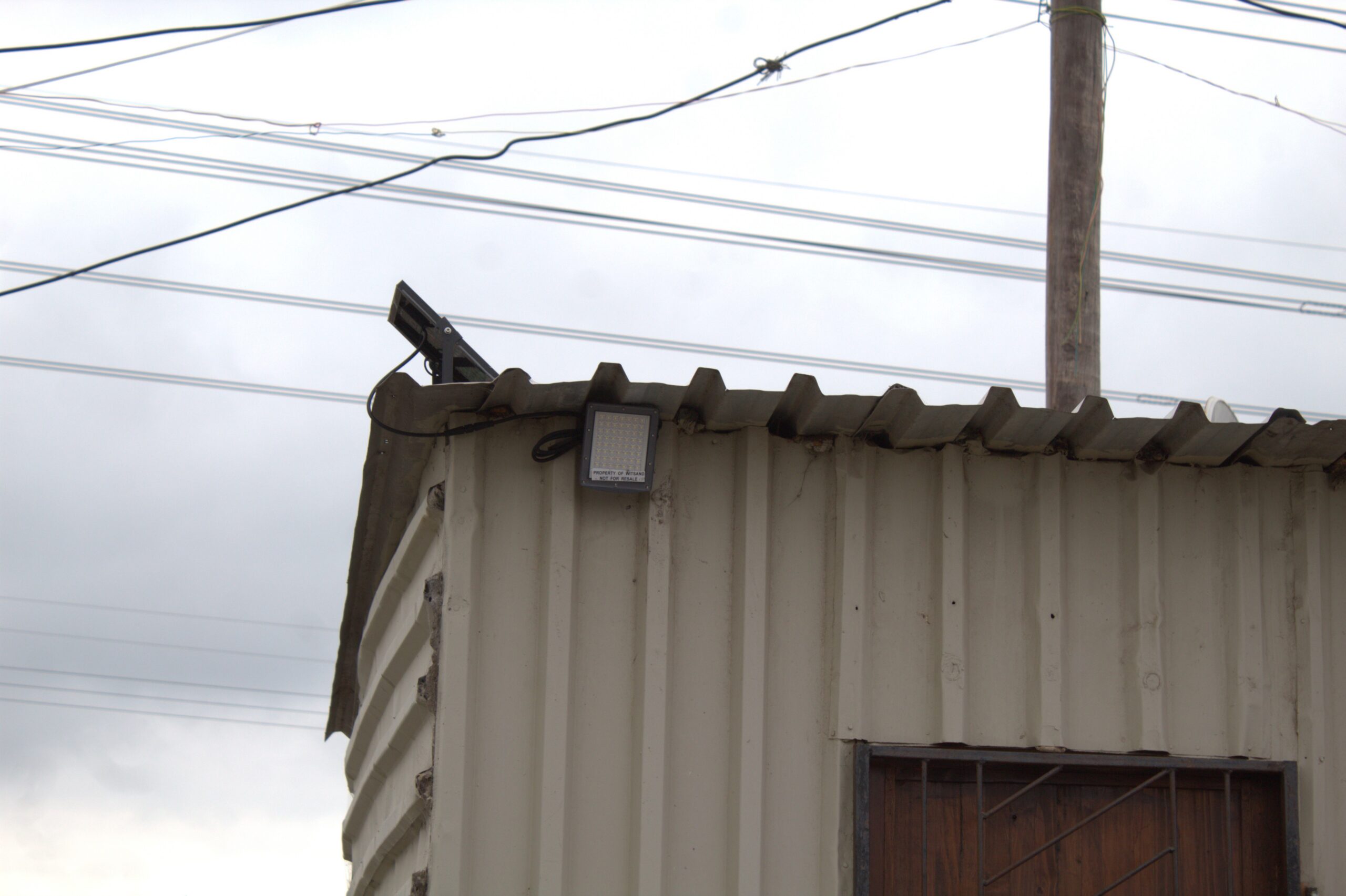
More than 290 wall-mounted solar lights have been installed across Witsand to date, positioned in areas identified by residents as particularly dark or unsafe, including pedestrian passages and around external toilets and water points. The project aims to improve access to essential services and contribute to safer, more resilient neighbourhoods through a reliable, clean-energy lighting solution.
A key feature of the Witsand project is its community-led approach. Residents have been involved in identifying priority areas and shaping the lighting layout, while community representatives participated in workshops to determine where lighting could have the greatest value. Local residents were also trained to install the lights.
This approach goes beyond consultation. It creates opportunities for community members to develop practical skills and participate in the installation, monitoring and longer-term maintenance of the infrastructure.
The experience also highlights an important consideration for municipalities looking to expand solar public lighting: installing the technology is only one part of delivering a sustainable service.
Solar lighting can provide a practical option in areas where extending conventional electricity infrastructure may be difficult, costly or take time. But for these systems to remain effective, questions around procurement, financing, ownership, maintenance and monitoring need to be considered from the outset.
These considerations are informing Sustainable Energy Africa’s work with PEP to support the City of Cape Town’s solar lighting initiative for informal settlements.
Through the South Africa Clean Energy Project, SEA is supporting South African cities to advance a Just Energy Transition through practical implementation, municipal leadership and collaboration. In the context of solar public lighting, this includes considering where solar is appropriate, how systems can be procured and financed, and how infrastructure can be operated and maintained over its lifetime. It also creates opportunities to explore the role of local SMMEs and community-based enterprises in installation, maintenance and monitoring.
As Cape Town’s solar lighting initiative progresses, experiences from Witsand can help inform approaches to delivering more equitable, resilient and sustainable public lighting in other under-served settlements.
For SEA, the work reinforces an important principle of a Just Energy Transition: energy solutions need to respond to the realities and priorities of the communities they are intended to serve.