
Solar Streetlighting
Solar Streetlighting uses sunlight instead of electricity from the grid. During the day, a solar panel collects sunlight and stores the energy in a battery to power lighting at night. Solar streetlighting is an energy access and service delivery tool providing lighting where grid electricity is not available. This is
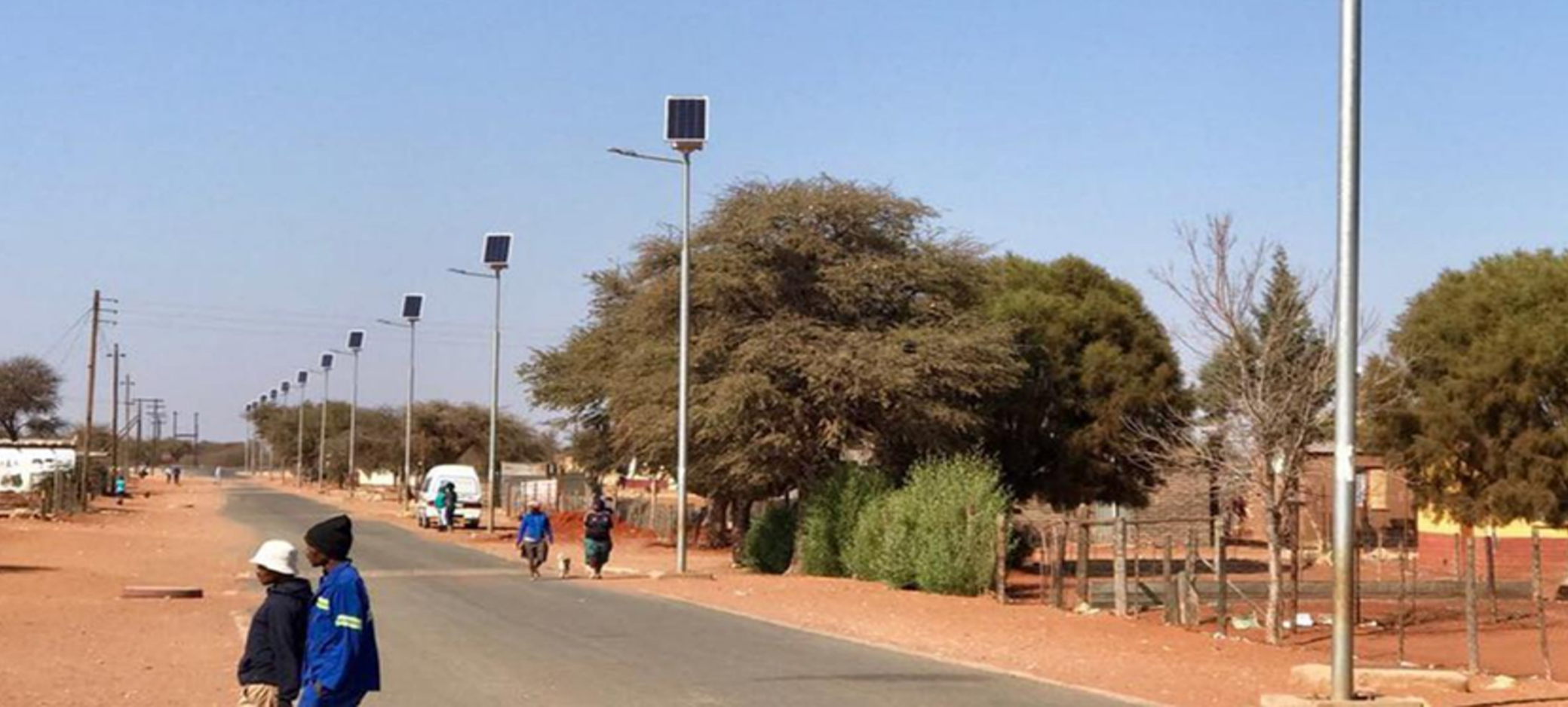
Solar Streetlighting uses sunlight instead of electricity from the grid. During the day, a solar panel collects sunlight and stores the energy in a battery to power lighting at night. Solar streetlighting is an energy access and service delivery tool providing lighting where grid electricity is not available. This is common in informal settlements, rural areas, and underserviced communities. It improves safety and quality of life by providing visibility at night, therefore reducing crime risks.
There is no dedicated solar streetlighting policy in South Africa, but they are commonly implemented through municipal procurement systems as a public infrastructure. Although not explicitly stated, solar streetlighting aligns with municipal Integrated Development Plans (IDPs) and national policy on achieving energy access goals, basic service delivery, and just transition objectives.
Several local municipalities have piloted solar streetlighting within communities including Mkhambathini and uMvoti in KwaZulu Natal, Gamagara Local Municipality in the Northern Cape, and Govan Mbeki in Mpumalanga.