
“Spider-Man Is Not Coming”: SCORE Convening Calls for Action on a People-Centred Just Transition
groundWork’s SCORE Convening brought communities and stakeholders together to advance energy democracy, community ownership and a just renewable energy transition in South Africa.
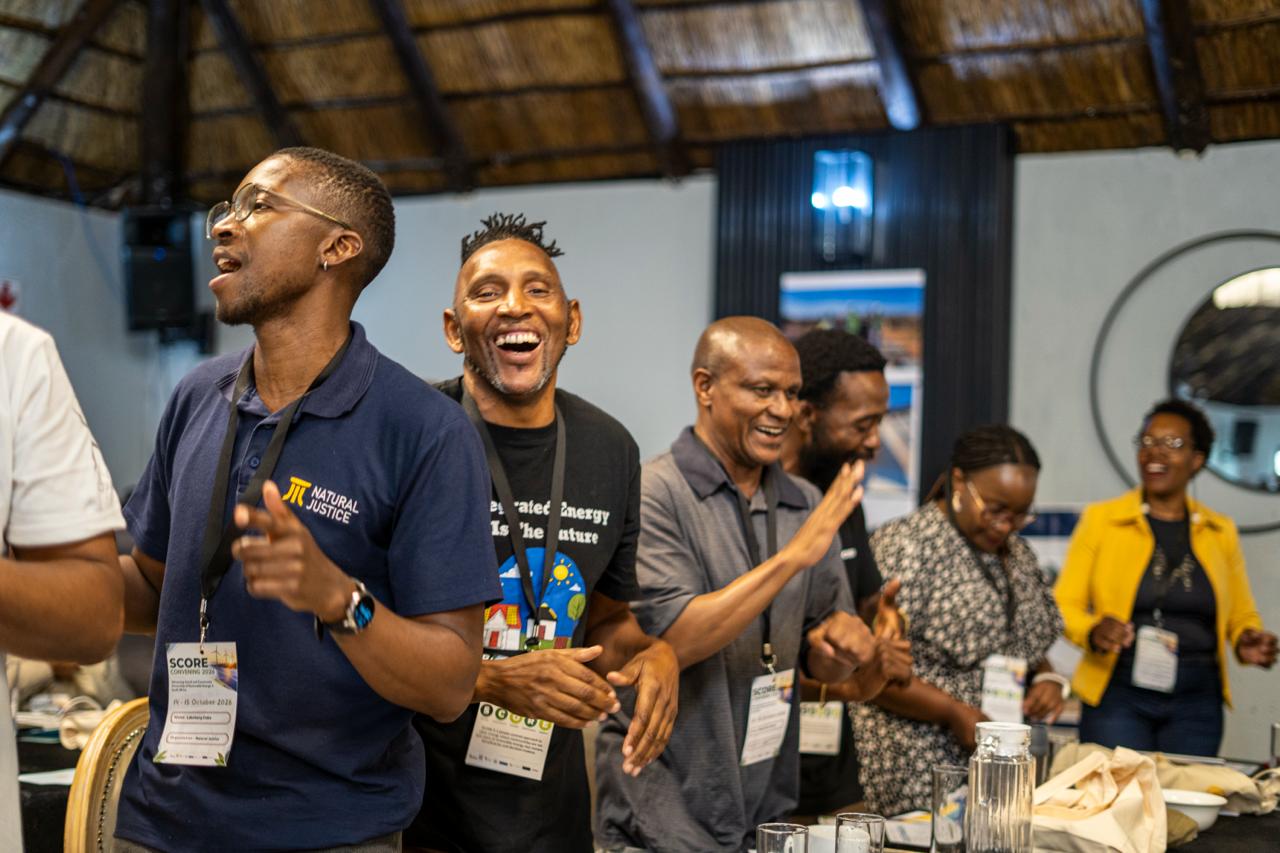
groundWork hosted a two-day Social and Community-Owned Renewable Energy (SCORE) Convening in Johannesburg on 14 and 15 October 2026. The convening brought together civil society organisations, community representatives, government entities and private-sector representatives to engage on South Africa’s just renewable energy transition and the role of communities in shaping it.
Under the theme Energy Democracy in Our Lifetime, discussions explored what it means for communities to participate in and take ownership of the energy transition, including financing models, community equity, benefit-sharing arrangements and the challenges that need to be addressed to ensure communities are not left behind.
Welcoming participants, Bobby Peek of groundWork urged attendees to see themselves as “right-holders” rather than stakeholders, emphasising that access to energy is a right and that communities should have a meaningful role in the Just Transition.
Promise Mabilo, founder of Vukani Environmental Movement (VEM) and Stanford Bright Award for Environmental Sustainability winner, called for greater unity among communities and civil society organisations working towards energy sovereignty.
Her message was clear: “Spider-Man is not coming.” If social and community ownership of renewable energy is to become a reality, communities and the organisations supporting them must work together to make it happen.
One of the key concerns raised was that communities continue to be left behind in renewable energy projects. Sphokazi Sigwebela of groundWork highlighted that communities are often not included or informed during the early stages of project development, while opportunities for skills development and meaningful participation remain limited.
“Communities are not capacitated with the relevant skills to look after and maintain installations,” Sigwebela said.
The discussions also highlighted that the Just Transition is not simply about moving away from fossil fuels towards cleaner energy. It is equally about who owns renewable energy projects, who makes decisions and who benefits from them.
Representatives from the Presidential Climate Commission and the South African Local Government Association emphasised the importance of affordable electricity, stronger policy support, skills development and ensuring that vulnerable communities benefit from the transition.
Megan Euston-Brown, Director at Sustainable Energy Africa (SEA), highlighted the need to connect community energy projects to a broader vision for transforming the energy system. She emphasised that progress requires not only action at community level, but also systemic and institutional change, supportive policy and regulation, and enabling mechanisms within local government.
The second day focused on identifying practical pathways towards realising SCORE, including financing community-owned projects, strengthening existing initiatives and building community knowledge and capacity.
Nkateko Chauke of the Community Just Transition Fund highlighted the importance of financing mechanisms that recognise the challenges faced by community organisations and provide support beyond funding alone.
Peter Mokomele of the Industrial Development Corporation emphasised that community ownership should go beyond receiving financial benefits. Communities should also have a voice in decision-making and influence over the projects they are part of.
A key message emerging from the convening was that achieving energy democracy requires collective action, stronger partnerships and communities being active participants rather than passive beneficiaries of the energy transition.
The convening forms part of groundWork’s ongoing work to advance socially owned renewable energy, in partnership with Sustainable Energy Africa and community organisations, including VEM, the South Durban Community Environmental Alliance and Abahlali baseMjondolo.
Ultimately, the message was clear: a Just Transition cannot be just if communities are left behind. As Mabilo reminded participants, Spider-Man is not coming. Communities and organisations must work together to make energy democracy a reality.